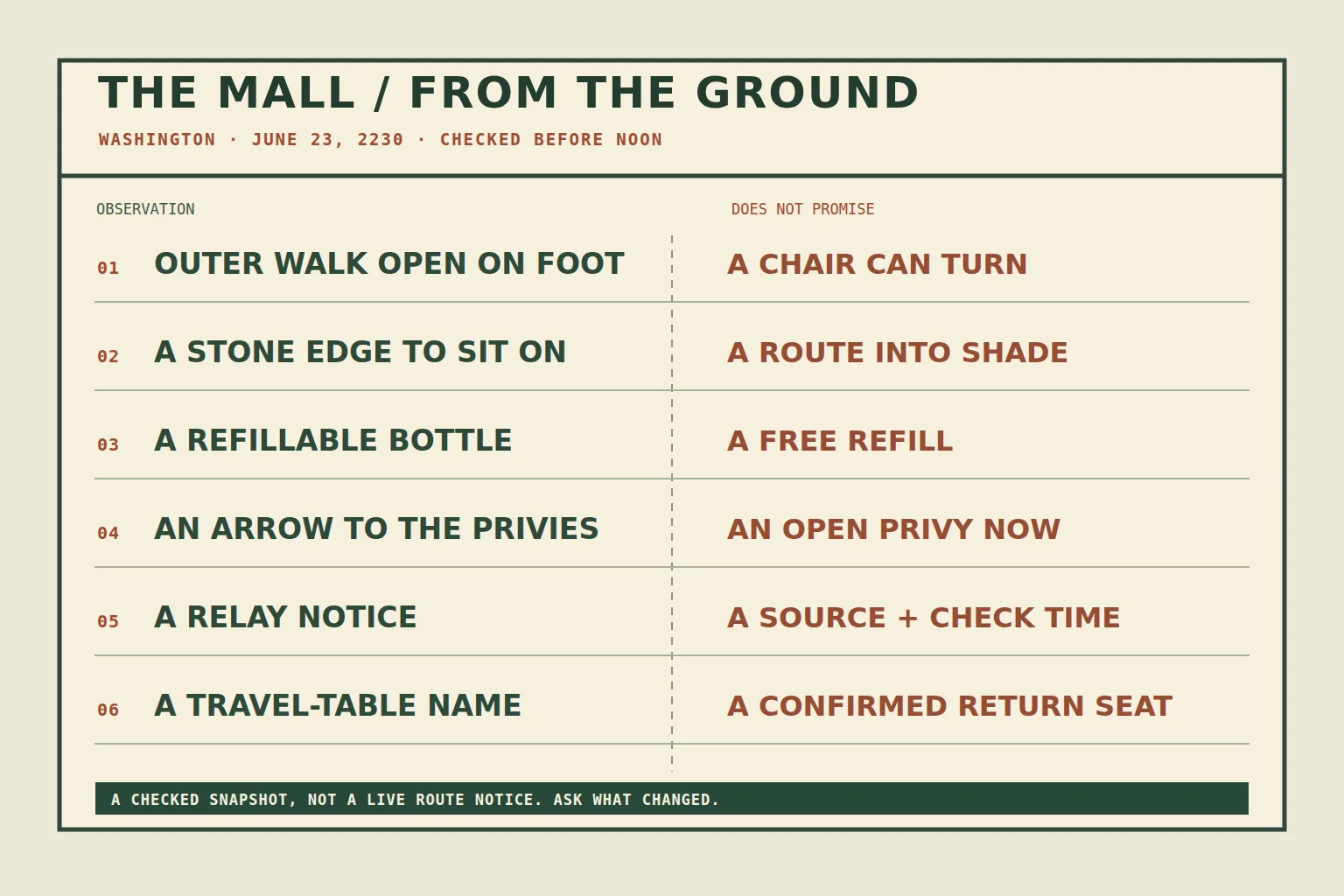
A field sheet for people attending, working, passing through, or trying to get home. Washington, D.C. · June 23, 2230. Walked and checked before the noon address; the short checks beside individual items are later observations from the same morning, not promises about the next bell. This is an observed snapshot, not a live route notice or an emergency instruction. Ask a person on the ground what has changed.
The old monuments are excellent at telling a crowd where to face. They cannot tell you where to sit, find a privy, or recover a deposit. That is what this sheet is for. Keep it if it helps; correct it if you can. Nobody at the stage has endorsed it, which means nobody at the stage has been asked to read it.
1. The speaking ground. The platform is set where the broad worn walk opens toward the long monument view. Voices carry there, as does the illusion that the whole city has assembled. Jesus #2's gatherings bring travelers who have spent dearly to stand there. Some want consolation; others need a practical answer. Stage hands need a clear equipment edge. An edge is not ownership of the ground behind it. At the first check, a chalk line marked the equipment side; a handwritten question board stood on the public side. Neither chalk nor board tells you whether an answer was given.
2. The outside lanes. There are two ways to leave the speaking ground without crossing its center: follow the outer walks until the crowd thins, or turn back by the side you came from. At the later morning check, both were passable on foot, though neither check established chair access; a rack on the south approach had narrowed one turn and its owner moved it when asked. A clear exit is not a decorative gap in a drawing. Give it the width of a person carrying a child, and do not make a person explain why they need to go. Some ushers worry that visible exits weaken the gathering. Others must help people use them. Keep the lane a lane.
3. Shade and sitting. The old trees do not reach the center of the bare ground. At the first check, the nearest usable shade was along the outer walk; its front edge moved while people waited. The low stone edge there can hold a tired body, but it is not reserved seating, and a seller's blanket does not turn every unoccupied length into a purchase. Bring a cloth if you need to sit on earth. One woman moved her bottle crate so a stranger could rest against the stone. That was hospitality, not a shade allocation program. If you are holding another person's place, say so; a place can be held without keeping its owner in the sun.
4. Water and privies. Refillable bottles are being sold between the approaches. At the later morning check, a stall on the south outer walk showed its refill price on the same board as the bottle price. A different bottle table stood by the free water cart near the north approach; its bottles and refills were a separate offer. Ask for both amounts before handing over a coin. A carried bottle and a right to refill it are different goods. The privy queue was behind the vendor line at the first check, with a hand-lettered arrow easy to lose behind a standing crowd. The attendants were keeping the path clear, not judging whether anyone's need was solemn enough for the gathering. If the arrow disappears, find the attendants; this sheet cannot certify that a privy remains open now.
5. Power and paper. The platform lamps and the small relay table each have their own batteries. At the first check, the relay table was copying notices onto paper because its charge was being saved for the next spoken notice. Do not assume a dark relay means there is no new message, or a lit lamp means a message is current. Read a notice's source and check time before treating it as a route. Organizers want the stage audible; the notice volunteers want travelers able to find their way home. The same remaining charge cannot always satisfy both. Paper is slower, but it can be handed to a person whose receiver is empty.
6. Travel money, deposits, and the trip back. Some visitors came farther than a walk across Washington. At the later morning check, a travel table, separate from the bed-booking table, was recording names of people asking about return seats; it was not issuing seats. Keep any fare slip until the carrier confirms what it buys. Sellers offering reserved bottles, stools, or souvenir bundles should write down the price, what portion is a deposit, who holds it, and the last moment a refund can be requested. If those terms are not on the receipt, ask for them before paying. A promise shouted from a platform does not amend a private sale. Nor does a skeptical question dishonor the reason somebody traveled. One seller said written terms slowed his line. A buyer said they might keep her from standing in it twice. Both were correct about the time.
This sheet ends at the edge of what was checked. It does not know the gathering's outcome, whether any announced help will arrive, or what every traveler will find on the road. The crowd is not one body. Leave enough room for its members to choose different directions.