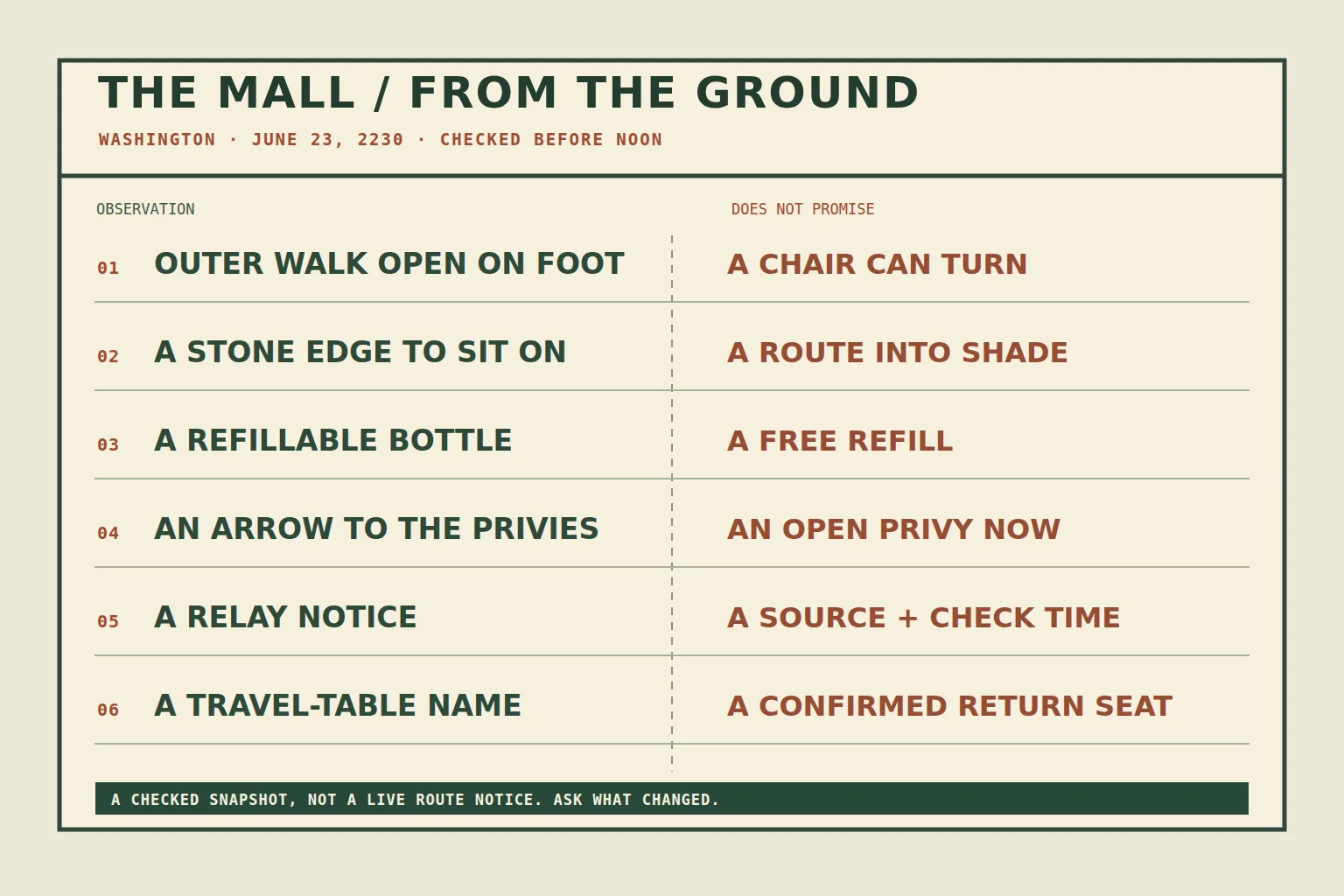
Before noon · Field sheet
The Mall, From the Ground ↗
A checked, provisional guide to the ground beneath a grand gathering: exits, shade, water, privies, notices, and the separate promises on paper.
Grand claims / limited shade
Everybody with a movement wants this view behind them. Everybody in the crowd wants water.
A CLOSER LOOK / 05
A June 23 relationship map, not a surveyed plan or a live route notice.
The monuments draw eyes forward; they cannot settle a bed or clear a lane.
People arrive with different reasons, needs, and journeys home.
Keep a way out visible; a foot-passable gap may still fail a chair.
Sitting and reaching shade are different problems when the route narrows.
A free cart and paid bottle tables can share a corner without offering the same thing.
Waste crews and attendants need a passage even while the address is underway.
Lodging receipts and return-seat inquiries are different promises; keep their records distinct.
Stage sound and checked public notices each depend on finite charge.
JUNE 23 / THREE VIEWS
Before noon · Field sheet
A checked, provisional guide to the ground beneath a grand gathering: exits, shade, water, privies, notices, and the separate promises on paper.
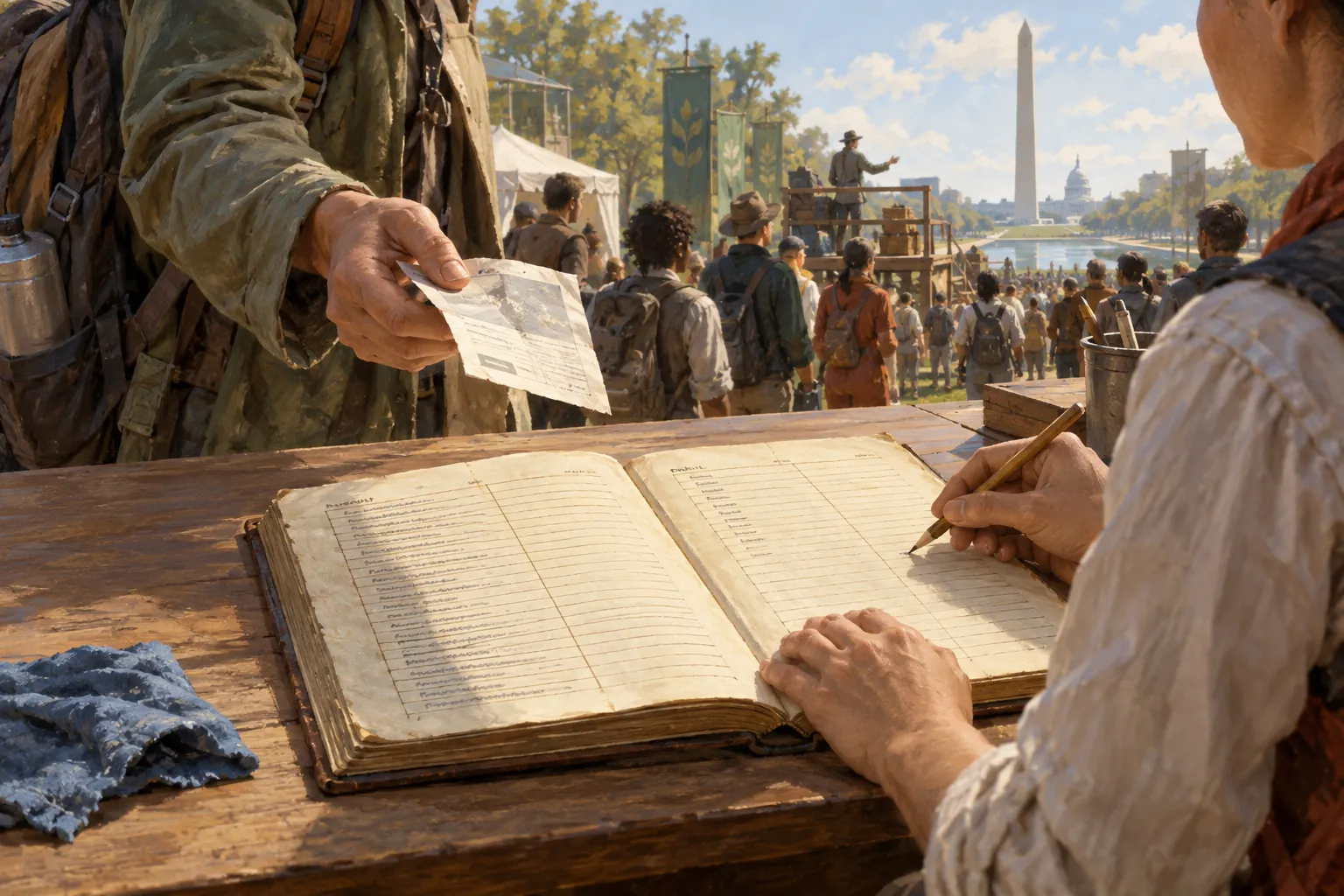
Noon · Bed book
At Joshua’s Mall gathering, seventeen beds have been paid for and only fourteen confirmed. Neri makes him say the smaller number aloud.
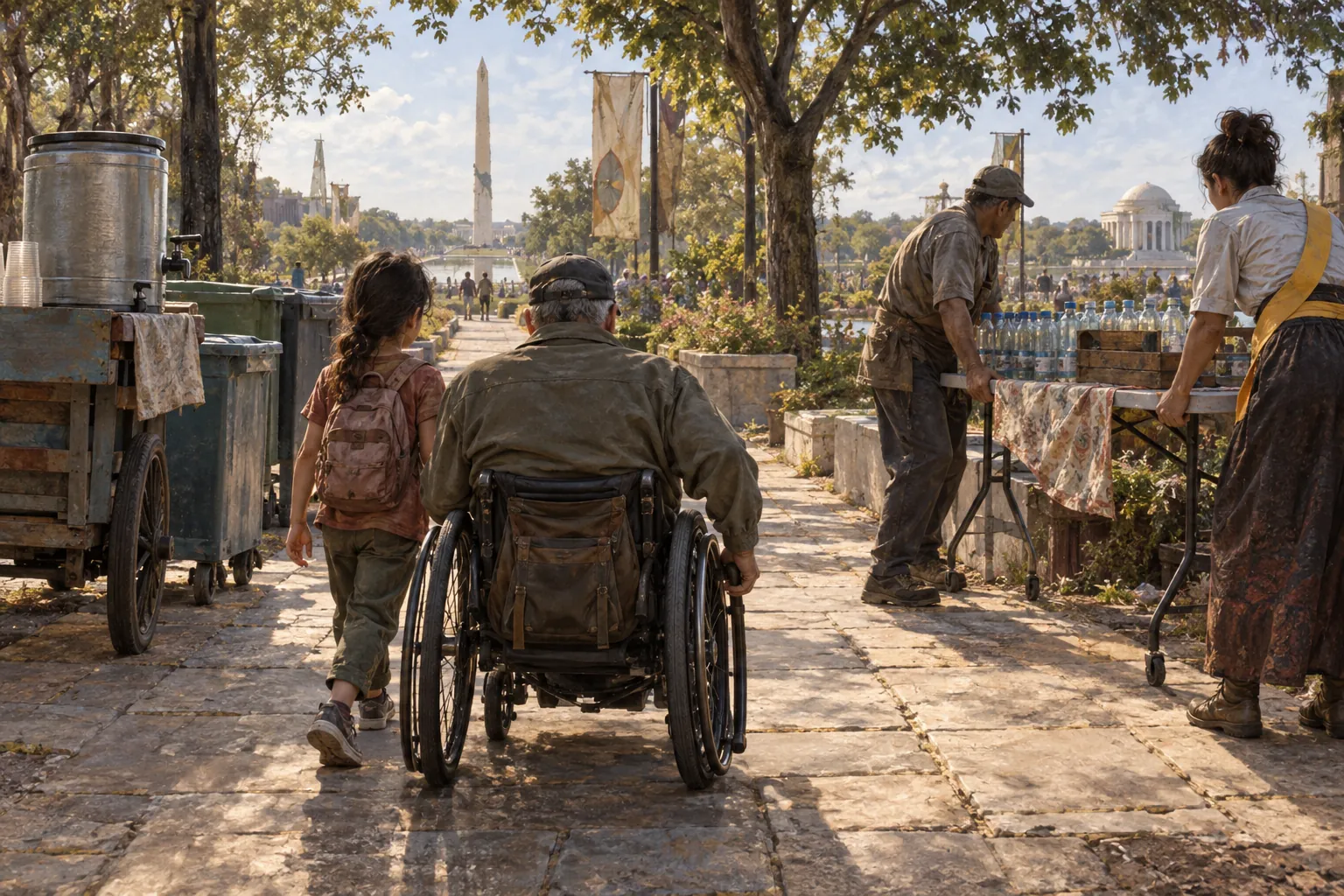
Afternoon · Access lane
Olga finds a path marked clear that a chair cannot use. The people who paid for and depend on that ground work out one day’s correction.
Monuments, old walkways, ground worn bare by crowds. Washington still knows how to provide a backdrop. The harder items are batteries, toilets, clear exits, and a place to sit without buying something blessed.
Jesus #2's gatherings draw people who have traveled a long way and paid more than they can replace. Sellers move between them with refillable bottles, souvenirs, and offers whose refund conditions require a very close look.
A stage tells you where to look. Before following its instructions, notice the outer lanes and the nearest shade. Olga does. A crowd is made of individuals who still need to get home after the announcement.
On June 23, a morning field sheet recorded the ground before Joshua’s address. By noon, Neri’s bed book forced a public correction: seventeen places paid for, fourteen confirmed. Later Olga found that a lane marked clear was still too narrow for a chair and helped secure a signed, one-gathering repair. The old obligations did not disappear with the corrected signs.
JUNE 23, 2230 / FIELD NOTES
The Mall knows how to make a person look certain. An old monument can stand behind a speaker; the crowd can fill the worn walks ahead; from the middle, the distance between them seems to vanish. At ground level it returns. A person on the outer walk may hear half a sentence and spend the other half finding a place to sit. Someone at the stage may see a lane on a plan and never see the bottle table occupying its firmest stones.
The space has no single keeper. A steward marks the ground. An event clerk accounts for paid positions. Sellers arrive with receipts and goods heavy enough to make a bad move costly. Attendants keep the privies usable. Someone hauls water; someone hauls the waste away. Stage hands want the sound to carry, and notice volunteers need enough charge to copy a message that can outlast the sound. Each of these people can do their job well while the arrangement between their jobs still fails a visitor. A blue line reading CLEAR ACCESS was once laid over marks that put a paid stall in the same lane. The plan was not a lie; it was not yet a passage, either.
There are kinds of shade here, and none is a promise. The trees reach the outer walk, not the bare speaking ground. A stone edge can hold a tired body until a vendor lays out a blanket, a family sets down bundles, or the stage battery needs a dry place. A priority chair with a box on it is still a chair no one can use. Olga learned the Mall by counting turns rather than monuments. When Lev wanted to pass in his own wheeled chair, moving a seller's table took a steward, a clerk's signature, a replacement sign, and the seller's assurance that his fee had not disappeared. The passage held for that gathering. It did not amend tomorrow's marks by itself.
Money arrives before certainty. People travel to hear Joshua—Jesus #2—because belief can be worth a difficult road. A fare, a bottle deposit, a bed deposit, and a place to sleep are different things, even when a poster makes them feel like one invitation. At the June 23 gathering, Neri's book held seventeen paid bed claims and fourteen confirmed places. Joshua said the smaller number aloud and stopped taking new overnight deposits without a written confirmed address. Three existing claims remained to answer. The travel table could record a return-seat inquiry but could not issue a carrier's seat. A clerk's carbon copy kept the question from vanishing; it could not carry its owner home.
That is the Mall's quieter argument with its own grandeur. A sign must be read at standing height. A public water cart must remain distinguishable from a merchant's bottles. An exit needs enough width for the person who needs it, not the person drawing it. A receipt should say who holds a deposit and when it can be returned. None of these sentences settles whether the address was worth coming for. They make room for people to answer that question without surrendering the rest of their day to somebody else's claim.
The next gathering can inherit a better mark, or only the memory of one. The three bed claims still have names. The route home still belongs to a carrier with a board, a fare, a vehicle and an available seat—not to an inquiry strip. The Mall is most honest when its magnificent view and its small print can both be seen from the same piece of ground.
THE CITY KEEPS GOING